
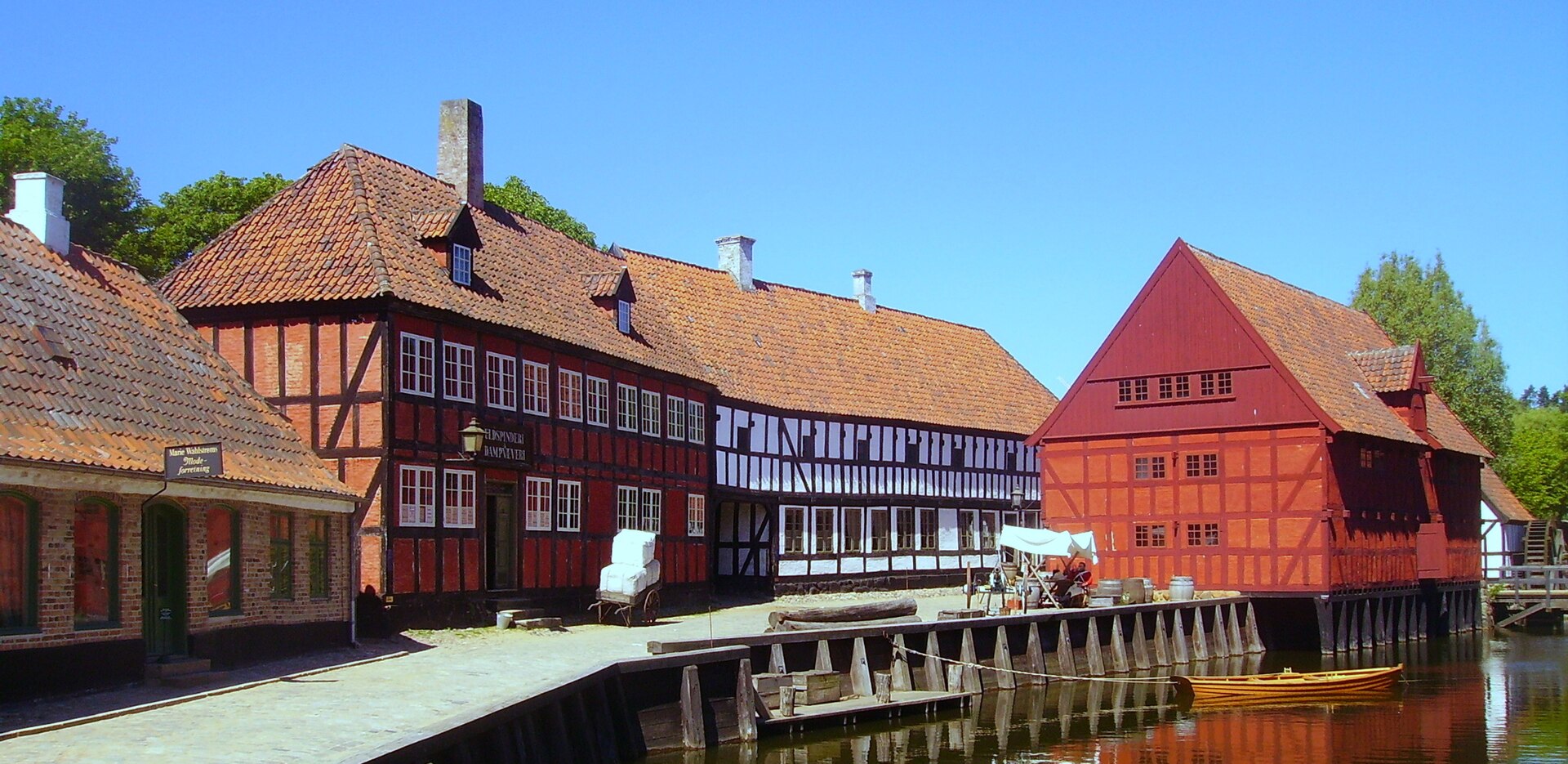
Walk into Denmark’s past in the heart of Aarhus
In the middle of modern Aarhus, behind timber-framed gates and old brick walls, Den Gamle By offers one of Denmark’s most absorbing journeys through time. This is not a single grand monument but a complete historic town: streets lined with workshops, shops, homes, gardens and public buildings gathered from towns across Denmark and carefully reconstructed here.
The name means The Old Town, but the experience is more ambitious than a traditional open-air museum. You can watch a blacksmith work, enter a merchant’s apartment, smell bread from a historic bakery and hear the clatter of a horse-drawn carriage. One turn may take you from a market street in the nineteenth century to a Danish home in the 1970s. The result is a place that makes history feel domestic, physical and surprisingly familiar.
Den Gamle By is especially rewarding for visitors who want more than a quick photograph. Allow at least three hours, and longer if you enjoy museums, architecture, design or historical detail. Families can explore at their own pace, while adults will find plenty of thoughtful exhibitions about how ordinary people lived, worked and celebrated.
From a historic collection to a living town
Den Gamle By began with a single historic building. In 1909, the Mayor’s House from Aarhus was displayed as part of a national exhibition, inspiring the creation of an open-air museum devoted to Denmark’s urban heritage. Buildings from other towns were later dismantled, transported and rebuilt in Aarhus, creating a streetscape that spans several centuries.
The museum’s oldest atmosphere comes from the 1500s through the 1800s, when Denmark’s towns were shaped by guilds, trade and tightly packed wooden houses. Merchants lived above their businesses, craftsmen worked in small workshops and servants were part of the household. As you move through this quarter, look closely at signs, doorways and interiors: the small details often tell more than the buildings themselves.
Den Gamle By also explains more recent history. The 1927 neighbourhood captures the period when electricity, modern retail and new ideas about domestic life were changing Danish cities. The 1974 area moves into living memory, with a street, homes and businesses that many visitors will recognise from childhood or family stories. This progression is one of the museum’s great strengths. Danish history does not stop at the age of horse carts; it continues through radios, supermarkets, political posters and the design of ordinary homes.
Rather than presenting the past as a series of dates, the museum concentrates on lived experience. It asks what people ate, how they earned money, where they slept and how technology altered the rhythm of a day. That makes Den Gamle By accessible even if you know little about Danish history.
What to see and do inside Den Gamle By
Begin with a slow walk through the historic town before choosing individual buildings. The main streets are easy to explore, but the most memorable discoveries are often inside. Step into a bakery or grocery shop to see how goods were displayed, visit workshops where traditional skills are demonstrated, and examine homes furnished according to different social classes and periods.
- The historic town: Explore merchant houses, craftsmen’s workshops, a post office, a school and public buildings that reveal how a Danish market town functioned.
- The 1927 quarter: Notice the shift toward modern urban life, including changing shopfronts, household technology and more specialised interiors.
- The 1974 neighbourhood: Enter homes and businesses from the recent past, where furniture, packaging and everyday objects create an intimate portrait of Denmark in the twentieth century.
- Decorative arts and interiors: Look for exhibitions and furnished rooms that connect Danish design with ordinary domestic life rather than only famous designers.
- Seasonal experiences: Christmas is particularly atmospheric, with decorations, traditional food and festive activities, while summer often brings demonstrations and a livelier outdoor programme.
Check the day’s programme when you arrive. Demonstrations, talks and character-led activities vary by season, and some are easy to miss if you simply follow the main route. The museum’s gardens also deserve time: they are practical historical spaces rather than decorative extras, showing how vegetables, flowers and fruit were cultivated in different periods.
Children usually enjoy the movement and variety of the museum. There are animals, open spaces, hands-on activities and plenty of doors to open, while adults can focus on architecture and social history. The site includes uneven historic paving and cobbled streets, so visitors using wheelchairs or pushchairs should allow extra time and ask staff about the most accessible routes. Some historic interiors are reached by narrow entrances or stairs.
Planning a comfortable visit
Opening hours and admission prices change according to the season, and not every building or activity operates every day. Before travelling, check Den Gamle By’s official website for current hours, ticket types, special exhibitions and event dates. Buying tickets online can be useful during busy holiday periods, but always confirm whether a particular ticket includes seasonal programmes.
Wear comfortable shoes and dress for changeable weather. Much of the museum is outdoors, while the temperature and floor surfaces vary from one historic building to another. A lightweight rain jacket is more useful than relying on a forecast that promises a dry day. In winter, cold weather can make the open streets feel authentic but also more tiring, so plan warm breaks in cafés or indoor exhibitions.
Food is part of the experience. Depending on the season, you may find cafés, historic food shops or places serving traditional Danish treats within the museum. You can also combine the visit with a meal in central Aarhus, which is only a short journey away. If you want to see the site thoroughly, avoid scheduling it immediately before another timed attraction.
For a smoother day, download the free Denmark Guide app on iOS or Android before you set out. Its offline maps and directions are useful if you are walking from the city centre, while nearby-spot suggestions can help you build a route that includes Aarhus’s botanical gardens or another central attraction without constantly checking your signal. Save the museum and your accommodation in advance, especially if you are visiting with children or arriving by public transport.
When to visit and how to get there
Spring and summer offer the fullest outdoor experience, with gardens in bloom, longer daylight and more demonstrations. These are popular periods, particularly around school holidays, so arriving near opening time gives you quieter streets and better access to the most popular interiors. Autumn brings softer light and a calmer mood, while the Christmas season transforms the museum with decorations, food traditions and festive activity. Winter visits can be especially atmospheric, but check the programme carefully because opening hours may be reduced.
Den Gamle By is located in Aarhus’s central area beside the Botanical Garden. From Aarhus Central Station, it is possible to walk in roughly 20 minutes, depending on your route and pace. Local buses also serve the area, and cycling is a natural way to reach it in this bike-friendly city. If you are driving, use navigation to locate public car parks rather than expecting extensive parking immediately beside the museum.
Public transport connections are easiest to manage with a little preparation. The Denmark Guide app can provide offline directions once you have downloaded the relevant map, which is helpful when you are changing between train, bus and walking routes. It can also point out nearby cafés and sights for a post-museum break, although you should verify live transport departures through the local operator on the day.
Allow extra time if you are visiting in December, when atmospheric streets and food stalls can tempt you into a longer stay. Conversely, a focused visit of two to three hours is enough for the main historic town if your Aarhus itinerary is tight. The most rewarding approach is to resist rushing from building to building: pause at a workshop, read the household stories and notice how Denmark’s urban life changed from one generation to the next.
Den Gamle By succeeds because it makes history tangible without making it feel remote. In one afternoon, you can move from a pre-industrial merchant’s world to a modern Danish living room, seeing not only how buildings changed but how work, family life, shopping and technology reshaped the country. It is an essential Aarhus experience for first-time visitors and a place worth revisiting whenever a new season or exhibition offers another view of Denmark’s past.